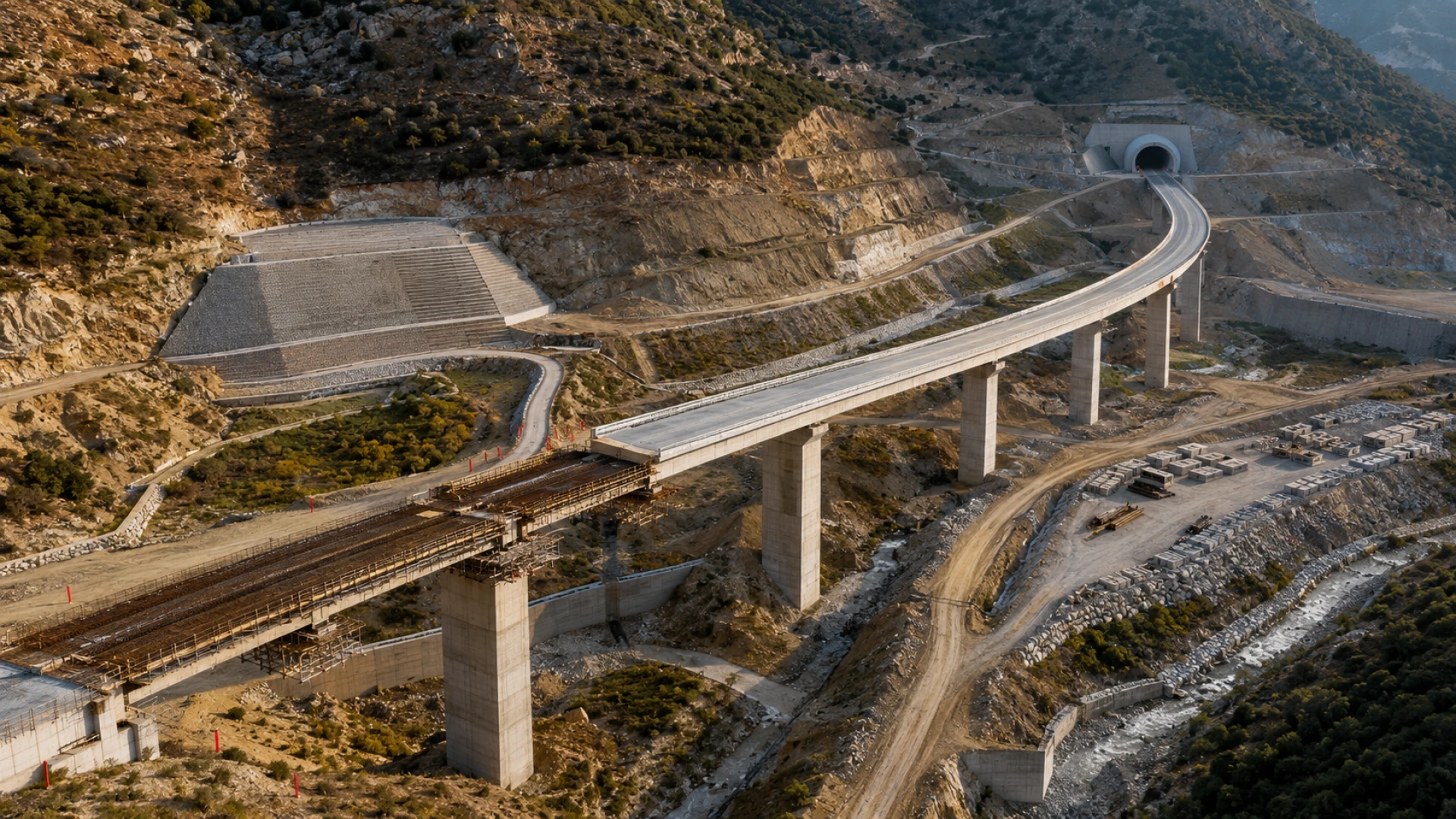


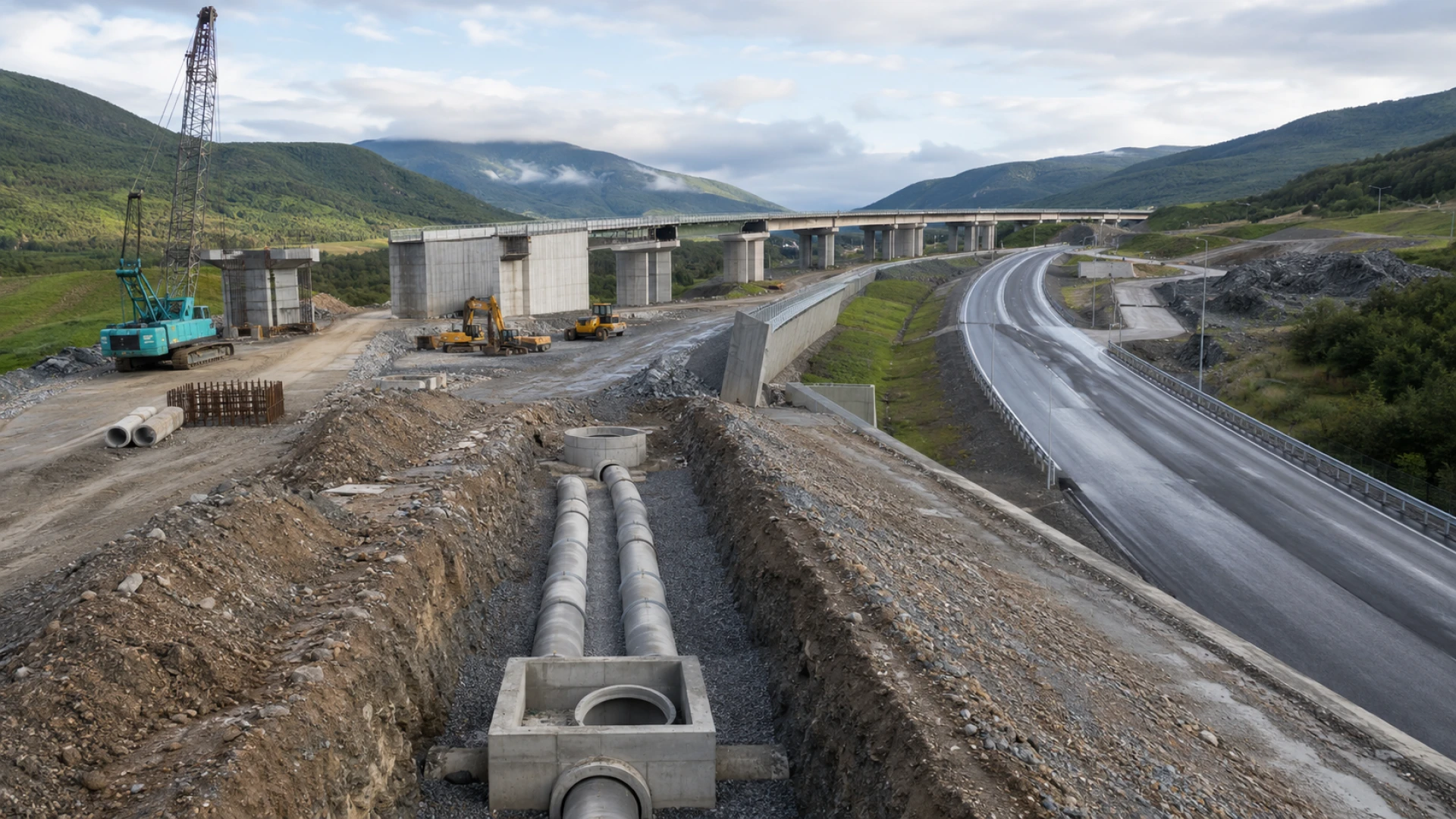
Planning, design, and construction in infrastructure projects form an integrated process extending from translating an investment need into technical requirements to placing the facility safely into operation. Success in transportation, energy, water, communications, and industrial infrastructure investments does not depend solely on completing field construction. Accurate needs definition, reliable investigation data, buildable design, permit management, clear tender documents, controlled construction, and complete handover must be considered together. When information continuity is preserved between stages, cost, schedule, quality, environmental impact, occupational safety, and operating performance become more manageable.
1. How are an infrastructure project’s needs and scope defined?
The first stage of an infrastructure project is to define the need and investment objective clearly before designing a solution. Existing capacity, service level, user demand, growth expectations, regulatory requirements, and operating problems are examined together. The problem the project will solve, the geographical area it will cover, and the performance conditions it must satisfy are specified in measurable terms.
Scope definition is not merely a list of structures or systems to be built. Complementary work such as land acquisition, relocation of existing utilities, connection points, temporary facilities, permits, environmental measures, testing, and operational handover should also be included. An interface overlooked at the beginning may become a design change, schedule delay, or ambiguity of responsibility between parties during construction.
Issues to clarify in the initial decision
The project needs document brings the investment rationale, intended service level, primary constraints, and success criteria together within a common reference. This document makes it easier to compare the different expectations of the investor, engineering team, public authorities, operator, and other stakeholders. Alternative solutions should be evaluated not only by initial capital cost but also by the capacity and operability they provide throughout their service life.
- Capacity, condition, and deficiencies of the existing infrastructure
- Current demand and future capacity requirements
- Project area, connections, and interfaces with other systems
- Technical performance, durability, and service-continuity objectives
- Land, environmental, budget, schedule, and regulatory constraints
- Expectations of the investor, users, operator, and public authorities
- Work included in and excluded from the project scope
- Approval authorities, decision gates, and success indicators
Sound infrastructure planning defines not the structure to be built first, but the need to be met, the service to be provided, and the performance to be verified.
2. How are preliminary studies and feasibility assessments conducted?
Preliminary studies and feasibility assessments determine whether an investment concept is technically, environmentally, legally, and economically viable under site conditions. Desktop information, field inspections, existing facility records, and preliminary measurements are evaluated together. The purpose is not to complete the detailed design prematurely, but to eliminate impractical options and make uncertainties requiring further investigation visible.
Route or site selection should not be based solely on the shortest distance or lowest construction cost. Geological conditions, topography, land-acquisition needs, settlements, environmental sensitivities, existing infrastructure, logistics access, and maintenance requirements should be compared together. An option that appears favorable under one criterion may carry greater overall project risk because of permitting or operating conditions.
Alternatives to compare during feasibility
Comparable alternatives analysis requires options to be examined using the same capacity, service level, evaluation period, and cost scope. In addition to capital cost, energy use, maintenance, replacement, staffing, outage, and end-of-life obligations should be considered. When assumptions, data sources, and uncertainties are explained, the decision does not depend on a single result value.
- Different route, facility location, and connection options
- Technical capacity and phased expansion alternatives
- Geology, ground, hydrology, and natural-hazard conditions
- Environmental and social impacts and mitigation measures
- Land acquisition, easement, and expropriation requirements
- Capital, operation, maintenance, and replacement costs
- Construction method, procurement availability, and implementation schedule
- Project outcomes under base, favorable, and adverse scenarios
3. How are site data and engineering investigations prepared?
Engineering investigations produce and validate the physical data supporting infrastructure design. Topographic mapping, ground investigations, hydrological measurements, existing utility detection, and environmental reviews are planned according to the project type. The scope of investigation should be determined not merely by the minimum information needed to begin design, but by the level of detail required to reduce critical risks that may arise during construction.
An error or coordinate inconsistency in site data can make even the most accurate calculation method unreliable. Measuring equipment, coordinate systems, reference elevations, sampling locations, laboratory methods, and data quality should be documented. Base information used by different disciplines should be aligned in a common data environment, and legacy drawings or authority records should not be treated as definitive without field verification.
Fundamental studies to include in the investigation program
Traceable site data is data whose location, date, method, and accuracy level are known. Additional drilling, measurement, or investigation should be possible when a new uncertainty emerges during design. Treating the investigation program as a one-time task independent of design may transfer critical ground conditions or utility conflicts into the construction stage.
- Geodetic network, existing-condition survey, and digital terrain model
- Geological, geotechnical, and, when necessary, geophysical investigations
- Groundwater, surface-water, and flood assessments
- Identification of existing roads, pipelines, cables, and structures
- Material sources, access roads, and construction-site logistics
- Environmental, archaeological, and social-sensitivity studies
- Sampling, laboratory, calibration, and quality records
- Reporting of data gaps and additional investigation requirements
4. How are preliminary and detailed designs developed?
The preliminary design defines the main layout, capacity, system components, and fundamental design criteria of the selected solution, while detailed designs translate that solution into constructible field information. Architectural, civil, mechanical, electrical, controls, transportation, and environmental disciplines should proceed according to common design principles. Each discipline being correct independently is not sufficient when physical and functional coordination between them has not been achieved.
As the design develops, calculations, drawings, technical specifications, quantity takeoffs, and equipment schedules should be updated under the same revision. When a change made in one document is not transferred to others, conflicts arise during tendering and construction. The rationale for design decisions, applicable standards, load cases, and acceptance criteria should be documented to support independent checking and later revisions.
Characteristics of a constructible design
A constructability review evaluates the design not only in terms of calculations but also with respect to site access, construction sequence, equipment capacity, temporary works, occupational safety, and maintenance conditions. Contractor experience may contribute to the design, but fundamental performance criteria and employer requirements should not be left uncertain before tendering.
- Approved design criteria and capacity assumptions
- Interdisciplinary coordination and clash detection
- Structural safety, durability, and disaster effects
- Operational access, maintenance spaces, and equipment replacement
- Effects of temporary works and construction stages on design
- Material, equipment, and system performance requirements
- Consistency among quantities, estimates, drawings, and specifications
- Design checking, approval, and revision management
5. How are permits, tendering, and contracts managed?
Permit, tender, and contract preparations translate the approved technical solution into authority requirements and an executable procurement model. Processes such as planning approval, environmental authorization, excavation permits, crossings, connections, expropriation, and authority opinions should be integrated with the project schedule. Planning should consider not only permit application dates but also prerequisites, review periods, and potential revision requests.
Tender documents should define the scope, performance requirements, deliverables, quality controls, and boundaries of responsibility clearly. Conflicts between drawings and technical or administrative specifications cause bids to be prepared using different assumptions. Evaluation should consider not only the total bid price but also technical competence, schedule, team, methodology, supply chain, and risk approach.
Construction conditions to clarify before contracting
An interface matrix identifies the boundaries of responsibility among the investor, designer, consultant, contractor, supplier, operator, and public authorities. If areas such as design responsibility, use of site data, temporary works, testing, and connections are unclear, problems may be transferred between parties. Change, payment, extension-of-time, and dispute procedures should also be defined before work begins.
- Responsibilities and schedules for permits and authority approvals
- Tender scope, work packages, and delivery boundaries
- Technical specifications and performance guarantees
- Quantity, pricing, and payment principles
- Design, procurement, and construction responsibilities
- Quality plans, tests, and acceptance documentation
- Change, notification, and revision procedures
- Warranty, delay, insurance, and dispute provisions
6. How are field construction and project controls conducted?
Field construction converts the approved design into physical infrastructure through controlled work packages and verifiable construction records. Site mobilization, schedules, material approvals, method statements, temporary facilities, and safety plans should be prepared before work begins. The construction sequence should be evaluated together with site access, disciplinary interfaces, critical procurements, and environmental constraints.
Project control is not limited to measuring completed quantities. Schedule, cost, quality, occupational safety, environment, documents, risks, and changes should be monitored through a common reporting structure. Delays on the critical path should be identified early, and the owner and completion date of corrective actions should be recorded. Acceleration decisions should not become uncontrolled practices that weaken quality or safety.
Primary controls to monitor during construction
Field change management enables the design, cost, and schedule effects of unforeseen conditions to be assessed before approval. Work performed through verbal instructions or outdated drawings creates results that are difficult to verify later. The revised solution should be technically checked, approved by the relevant parties, and distributed to the field team through controlled documentation.
- Master schedule, critical path, and short-term production plans
- Material, equipment, supplier, and sample approvals
- Construction methods, inspection plans, and test plans
- Occupational health, safety, and environmental site measures
- Daily reports, progress measurements, and payment certificates
- Nonconformities, corrective actions, and repeat inspections
- Design queries, field instructions, and revisions
- Monitoring of risk, change, cost, and schedule effects
7. How are quality, testing, and acceptance verified?
Quality, testing, and acceptance processes demonstrate that construction complies with approved designs, specifications, and defined performance criteria. Inspection should not be limited to examining completed work; traceable records should be created from the material source through production and installation. Work that will become concealed should be inspected before closure, and the necessary measurements and test results should be approved.
The scope, method, equipment, acceptance limits, and responsible parties for testing should be defined before execution. When a test fails, the root cause of the nonconformity should be investigated rather than merely repeating the test. Repair or reconstruction decisions should consider effects on technical safety, service life, and system performance. Acceptance should not become an administrative formality that conceals incomplete work.
Verification documents required before provisional acceptance
Quality records show the materials, methods, teams, and inspection results through which the work was completed. When test reports and field records are linked to current as-built drawings, maintenance and failure analysis become easier during operations. Missing, contradictory, or untraceable records reduce handover quality even when physical construction has been completed.
- Material certificates and manufacturer conformity documents
- Inspection, test, measurement, and laboratory results
- Welding, concrete, fill, coating, and installation records
- Pressure, leakage, load, and functional tests
- Calibration certificates and records of equipment used
- Nonconformity closure and reinspection documents
- Punch lists and completion responsibilities
- Provisional acceptance and performance-verification records
8. How are commissioning and operational handover completed?
Commissioning and operational handover verify that the completed infrastructure can operate safely, reliably, and under defined service conditions. A sequence should progress from individual equipment tests to subsystem, integrated-system, and performance testing. Critical activities such as energization, pressurization, loading, or introducing flow should be conducted through approved procedures and coordination among responsible teams.
Involving the operating team only on the delivery date may cause significant knowledge loss. Maintenance access, spare parts, operating scenarios, and emergency requirements should be evaluated with the operator during design and construction. Training should be completed not merely through presentations but through practical scenarios on the actual system and verification of competence.
Checklist for successful handover and lifecycle management
In KTM Grup’s engineering, project, construction, and commissioning approach, infrastructure investments are treated not as disconnected deliverables but within a lifecycle supported by common technical data. Monitoring failure, capacity, energy consumption, maintenance, and service-continuity data after project completion helps validate design assumptions and supports more reliable planning of future investments.
- Have approved as-built drawings been prepared?
- Are inventory, warranty, and spare-parts records complete?
- Do operation and maintenance manuals match the installed system?
- Have integrated testing and performance acceptance been completed?
- Have operator training and emergency drills been conducted?
- Are punch-list items and warranty-period responsibilities defined?
- Have the maintenance plan and performance indicators been established?
- Has project data been transferred in an accessible and updateable format?
In conclusion, planning, design, and construction in infrastructure projects are not independent tasks completed one after another but an integrated management process in which decisions and data are preserved across stages. Accurate definition of needs and scope, validation of site data, interdisciplinary design, permit and contract preparation, controlled construction, documented quality management, and systematic commissioning collectively establish project reliability. When a lifecycle approach is adopted, infrastructure is delivered not merely as a constructed asset but as a safe, sustainable, maintainable system capable of providing the expected service.